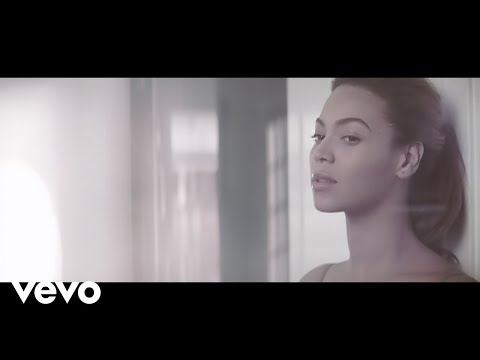
One Black-and-White Dance Floor, One Billion Views: Why 'Single Ladies' Refuses to Leave Us Alone
Video: Beyoncé - Single Ladies (Put a Ring on It) (Video Version) · BeyoncéVEVO
Hey Ambo Fam, let's talk about the song that turned a simple hand twist into a global mating call for commitment. Beyoncé's "Single Ladies (Put a Ring on It)" landed in 2008 as part of the double album I AM... SASHA FIERCE, and more than fifteen years later it's still in heavy rotation, still filling dance floors, and still ending arguments at weddings with a single raised hand.
The official clip on Beyoncé's channel has now racked up well over a billion views, a number that would have seemed absurd when the video first dropped in 2009. You can watch it here: [1]. But honestly, the view count is almost beside the point. The point is that this three-minute black-and-white video became one of the most imitated, parodied, referenced, and argued-about pieces of pop culture of the century so far.
Three Dancers, One Empty Room, Total Chaos
What's remarkable about the video is how little there is to it. No set pieces, no costume changes, no storyline. Just Beyoncé and two dancers (the J-Setting style choreography, all hips and hands and sharp angular poses) in a blank studio, shot in stark black and white. It shouldn't have worked. It should have been boring. Instead, it's arguably the most iconic music video of its decade, and the track's Wikipedia entry devotes entire sections to its accolades, its cultural impact, and the parodies and homages it inspired [2].
My take, Ambo Fam: the minimalism is the message. The song is about a woman who no longer needs the props. The ex who "decided to dip" is gone, and she's out here doing "her own little thing." The video strips everything down to bodies and rhythm, and in that emptiness, Beyoncé fills every frame. That's not a music video, that's a thesis statement.
The-Dream, Tricky Stewart, and a Chorus That Won't Quit
Behind the boards, the track was helmed by The-Dream and Tricky Stewart, with Beyoncé herself credited as a producer too, according to the song's page on Genius [3]. The-Dream, the North Carolina hitmaker behind some of the decade's smoothest R&B, brought that signature bounce, and the result is a beat that feels both futuristic and primal, all handclaps and hollow synth stabs.
And then there's that chorus. "'Cause if you liked it, then you should have put a ring on it" is one of those lines that crossed over from pop music into everyday language. People who've never heard the full song know the hook. People who don't listen to R&B at all know the hook. The Genius annotation even notes that the song carries an unofficial association with Sex and the City, which tells you how thoroughly it soaked into the late-2000s cultural bloodstream.
The lyrics themselves are worth a closer read than they usually get. On the surface, it's a kiss-off anthem: you had three good years, you wasted them, someone else noticed me, and now you're upset. But the bridge complicates things. Beyoncé sings about wanting a love that takes her "to a destiny, to infinity and beyond," and warns that if a man doesn't claim her, "like a ghost, I'll be gone." This isn't someone who's given up on love. It's someone who's raised the price of admission. That tension, between independence and desire, between "I need no permission" and "pull me into your arms," is exactly why the song has aged so well. It's not anti-love. It's pro-standards.
The Chart Run and the VMA Moment Nobody Forgot
Commercially, the song was a monster. It topped charts around the world and became one of the defining hits of the late 2000s, earning certifications and year-end and decade-end placements documented in detail on its Wikipedia page [2]. It's the rare track that was both a global chart juggernaut and a critical darling, picking up awards and landing on best-of-decade lists from publications that usually can't agree on anything.
And then there was the 2009 MTV Video Music Awards, which the Wikipedia entry covers under its own dedicated section, and for good reason. When the video lost the Best Female Video award, Kanye West stormed the stage during Taylor Swift's acceptance speech to declare that Beyoncé deserved it. The incident became one of the most replayed moments in awards-show history, spawned a decade of memes, and, in a strange twist, cemented both women's places in pop lore. Later that same night, Beyoncé won Video of the Year and graciously invited Swift back to the stage to finish her speech. Class act, and honestly, the kind of moment that made the song's own message about knowing your worth land even harder.
The Legacy: Hands Up, Forever
The imitations tell the real story. Saturday Night Live did it. Wedding parties did it. Toddlers did it. Bar mitzvahs did it. For a solid year, you could not attend a social gathering without someone doing the hand-twist-and-ring move. The Wikipedia article catalogs the parodies and homages in detail, and the list reads like a map of 2009 pop culture [2].
That's the thing about "Single Ladies." It's not just a song, it's a gesture, an argument, a punchline, and a genuine anthem all at once. The YouTube comments, over 163,000 of them on the official video [1], are a time capsule of people discovering it, teaching it, and proposing to it.
So here's to the track that told a generation of exes exactly where they went wrong, and did it with a beat you can't sit still to. If you liked it, you should've put a ring on it, Ambo Fam. And if you haven't watched the video in a while, you know what to do.
Sources