The Song Rihanna Carried While a Secret Songwriter Watched From the Shadows
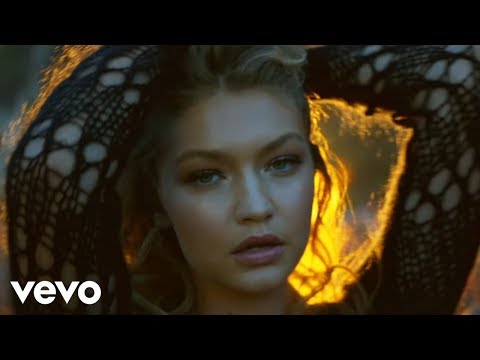
Video: Calvin Harris, Rihanna - This Is What You Came For (Official Video) · CalvinHarrisVEVO
Ambo Fam, let's talk about one of the sneakiest backstories in modern dance music. "This Is What You Came For," the 2016 team-up between Calvin Harris and Rihanna, sounds like a straightforward summer banger on the surface: glossy house production, a hypnotic hook, and one of the most recognizable voices in pop riding the drop. But underneath the strobe lights, this track was hiding a songwriting secret that blew up into one of the most talked-about celebrity feuds of the decade.
A Chart Juggernaut Disguised as a Casual Summer Single
The song dropped on 29 April 2016, arriving with almost suspiciously little warning. On paper it was a reunion, Harris and Rihanna had already conquered the world once before with "We Found Love," so expectations were sky high. According to the song's Wikipedia page, the track sits in EDM, dance-pop, house, and Eurodance territory, runs just under four minutes, and was co-produced by Harris and vocal producer Kuk Harrell [1]. It did exactly what everyone expected commercially, climbing charts around the globe and becoming one of the defining radio hits of that summer.
The official video, which you can still find on Calvin Harris's YouTube channel with hundreds of millions of views and over two million likes, is a striking piece of work in its own right [2]. Rihanna wanders through a sprawling warehouse party, framed inside a glowing cube that floats above the crowd, detached from the chaos swirling beneath her. It is a simple visual idea executed beautifully, and it turned the song into a festival-season fixture the moment it landed.
The Credit That Started a Firestorm
Here is where the story gets juicy. The song was originally credited to "Nils Sjöberg," a pseudonym that meant nothing to fans at first. The truth, confirmed when the credits were eventually updated, was that the co-writer behind that invented name was Taylor Swift, who was at the time in a relationship with Calvin Harris. The songwriting credit on the record lists Adam Wiles (Harris's real name) and Taylor Swift as the writers, as documented on the song's Wikipedia page [1].
When the reveal happened, things got messy fast. Harris took to social media to air his frustration, and the fallout played out in public in a way that felt remarkable even by celebrity standards. The whole saga became bigger news than the song itself for a few weeks, which is genuinely saying something when the song in question was dominating airwaves worldwide.
My take? The drama ultimately did the track a strange kind of favor. "This Is What You Came For" would have been remembered as a very good dance single regardless, but the secret-credit saga gave it a permanent place in pop culture lore. Nearly a decade later, you cannot talk about this song without someone mentioning who really wrote it.
Why the Song Itself Deserves More Credit Than the Gossip
It is easy to let the tabloid noise overshadow the music, and that would be a mistake, because "This Is What You Came For" is a masterclass in restrained dance production. Harris does not bury Rihanna under layers of noise. Instead, he builds a shimmering synth arpeggio around her vocal, lets the verses breathe, and saves the full drop for the moments where it hits hardest. The vocal production deserves special mention too. Kuk Harrell, who handled production duties alongside Harris, coaxed one of Rihanna's most ethereal performances out of the session, all breathy delivery and effortless melisma, as the credits listed on the song's YouTube upload confirm [2].
The structure is also smarter than people give it credit for. The hook is carried largely by the instrumental rather than a big belted chorus, which was a bold choice in a year when EDM-pop still leaned on giant vocal refrains. Rihanna functions almost like an instrument herself, weaving in and out of the mix. It is a formula that a lot of later dance-pop records tried to copy, and few pulled off as cleanly.
A Reunion Worth Remembering
Context matters here. "We Found Love" was arguably the single most successful DJ-and-pop-star collaboration of the 2010s, so any follow-up carried an enormous weight of expectation. Rather than trying to recreate that track's euphoric rush, Harris and Rihanna went the opposite direction: moodier, cooler, more mysterious. The fact that it still became a global smash speaks to how well the pairing works. Some partnerships just have chemistry that transcends whatever material they are handed.
The song has also proven remarkably durable. It shows up on decade-end retrospectives, it still fills dance floors, and the video continues to rack up views years after release. That is the real test of a dance record: not where it debuted, but whether people still move when it comes on. By that measure, this one passes with flying colors.
The Legacy: A Great Song Wrapped in a Great Story
So what is the final verdict on "This Is What You Came For"? I would argue it is one of those rare records that works on two completely separate levels. As pure music, it is a sleek, impeccably produced dance-pop gem with one of the era's most iconic vocalists at her most atmospheric. As pop culture history, it is a time capsule of 2016 celebrity chaos, secret songwriting credits, public spats, and a relationship imploding in real time.
The song outlived the drama, which is how it should be. Harris moved on, Swift moved on, and what remains is three minutes and forty-two seconds of expertly crafted house-pop that still sounds fresher than a lot of what followed it. The next time it comes on and someone in the room says "wait, who actually wrote this?", you will have the full story.
Until next time, keep your ears open and your playlists honest, Ambo Fam.
Sources