Thirty Years On, We're Still Arguing About Sally: Why Oasis's Most Misunderstood Anthem Refuses to Fade
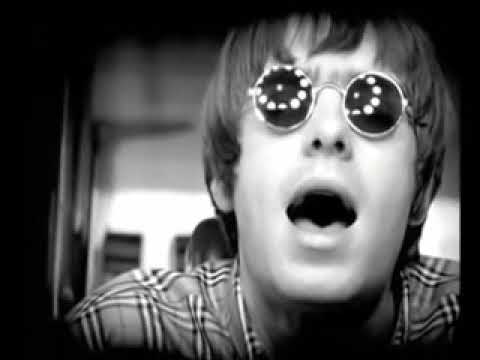
Video: Oasis - Don't Look Back In Anger (Official Video) · Oasis
There are songs that explain themselves, and then there is "Don't Look Back In Anger," a track whose author has spent decades cheerfully admitting he has no idea what it actually means. Somehow, that has not stopped it from becoming one of the most beloved songs in British rock history, a singalong so universal that strangers belt it in pubs, at weddings, and, in the darkest of moments, in the middle of a grieving city. Ambo Fam, let's talk about why a song built on nonsense has become a national heirloom.
A Hit Written From a Bed, and a Bit of a Blur
The track first appeared as the fourth cut on "(What's The Story) Morning Glory?" back in October 1995, before being lifted as a single in February 1996, according to the song's page on Genius [1]. It went on to be repackaged on the 2006 best-of collection "Stop The Clocks" and again on the 2010 singles retrospective "Time Flies... 1994-2009."
But here's the detail that keeps delighting fans: Noel Gallagher, who wrote the thing, has openly confessed that he was under the influence of illegal substances when he penned it, and to this day he maintains he genuinely does not know what the lyrics are about. That admission is preserved in the Genius song bio [1], and honestly, it might be the most Oasis fact imaginable. The man wrote the lyric sheet the way you write a dream on a napkin at 3 a.m., handed it to the nation, and the nation decided it was scripture.
That's the paradox at the heart of the song. Lines like "slip inside the eye of your mind" and "I'm gonna start a revolution from my bed" sound profound, and they might be, or they might be the product of a hazy afternoon and a borrowed Beatles chord. It doesn't matter. The words scan as feeling rather than narrative, and feeling is what people show up for.
So Who Exactly Is Sally?
The chorus hinges on a woman named Sally, who "can wait" because "she knows it's too late." Is she a real person? A composite? A figment of a chemically assisted imagination? Nobody knows, and that includes the songwriter. The Genius lyric annotations [1] show generations of listeners picking the verse apart, hunting for a Sally who was never definitively documented.
My take? Sally works precisely because she's blank. She's whoever you need her to be: the ex you didn't treat well, the friend you drifted from, the version of yourself you left behind. The song's title is a piece of advice, and the Sally verses are the cost of not taking it sooner. "Her soul slides away" is one of the great quietly devastating lines in pop, buried inside a song people scream at football matches. That's songwriting sleight of hand, intentional or not.
And then there's the outro, that tossed-off "at least not today," which turns the whole title from a command into a negotiation. Don't look back in anger, sure, but not today. Today we're allowed to be furious. It's the most human moment in the entire catalog.
The Video That Refuses to Age
The official promo clip, directed by Nigel Dick and pulled from the "Morning Glory" sessions, has been sitting on the band's channel since 2008 and has racked up hundreds of millions of views with nearly 1.9 million likes, per the video's own listing [2]. The description notes it was taken from the album and helmed by Dick, but the numbers tell the real story: nearly two decades after upload, people are still pressing play on a mid-nineties video in enormous numbers [2].
Think about that. A song released when Britpop was at its boiling point, uploaded in an era of ringtones and MySpace, still pulling a stadium's worth of views every day. Most nostalgia content decays. This one compounds.
When Manchester Needed a Voice, It Borrowed Noel's
The song's most important chapter was written by people who had nothing to do with writing it. In May 2017, after the terrorist attack at an Ariana Grande concert in Manchester, a crowd of Mancunians broke a minute of silence for the victims by spontaneously singing "Don't Look Back In Anger" together, as documented in the song's Genius bio [1]. The moment spread worldwide within hours.
The song's Wikipedia entry devotes an entire section to the Manchester Arena bombing and its aftermath [3], and the reason is obvious. When a city needed to say "we are heartbroken but unbowed" without a speechwriter, it reached for this chorus. Not a hymn. Not an anthem written for the occasion. A song from 1995 whose author admits he doesn't understand it.
That, to me, is the thesis of the whole thing. "Don't Look Back In Anger" endures because it is meaning-proof. It's a vessel. Noel filled it with gorgeous, evocative, half-remembered imagery, Liam filled it with sneer and swagger, and the rest of us have been filling it with our own lives ever since. The opening invitation, to slip inside the eye of your mind and find "a better place to play," is basically the song describing its own function [1].
The Takeaway
Three decades on, the arguments continue: is it better than "Wonderwall," who should have sung it, what on earth a revolution from one's bed looks like. All of it misses the point. The song was never a puzzle to solve. It's a mirror with a piano intro. And as long as people need something to sing when words fail them, Sally will keep waiting, right there at the fireplace, at least not today.
Sources