Half a Billion Streams Later, "Rock the Casbah" Is Still the Clash's Funniest Protest Record
Video: The Clash - Rock the Casbah (Official Video) · theclashVEVO
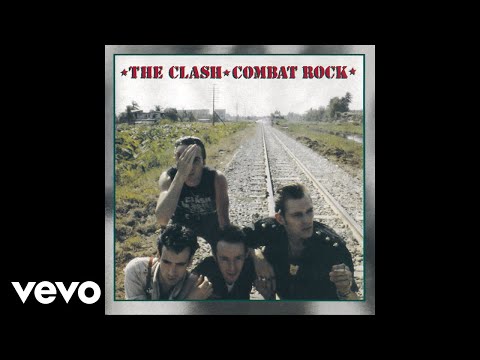
Ambo Fam, some songs age like milk, and some age like a fine, angry wine. "Rock the Casbah (Remastered)" by The Clash belongs firmly in the second category. The flagship track from 1982's Combat Rock has quietly crossed the half-billion-stream mark on the global charts, sitting at more than 524 million plays as of this writing, according to the song's analytics page on Soundcharts [1]. That makes it the second most-streamed Clash song in the band's entire catalog, trailing only "Should I Stay or Should I Go" and comfortably ahead of "London Calling."
Stop and think about that for a second. A song about a king banning rock music, written by a band that spent its early years being told punk was dead, is now one of the most-played protest songs of the streaming era. The revolution, it turns out, got remastered.
The Song That Almost Wasn't a Clash Song
Here is the detail that casual listeners always miss: "Rock the Casbah" was not primarily a Joe Strummer composition. The credits on the official upload of the remastered track, hosted on the band's own YouTube channel [2], list Strummer, Mick Jones, and drummer Topper Headon as co-writers, and the lore behind the track credits Headon with the music itself, including that immortal piano-and-bass groove, before Strummer added the lyrics. The track was released on May 17, 1982, and it remains one of the great ironies of the punk canon that the band's biggest American hit was built on a riff by the member who would soon be fired.
The story behind the lyrics has been retold many times over the decades: Strummer was reportedly inspired by real-world reports of authorities cracking down on Western music, and he turned it into a absurdist fable about a king's ban on rock and the DJ who defies it. The result is a song that functions simultaneously as a dance record, a satire, and a genuine act of solidarity with anyone who has ever been told what they are not allowed to listen to.
The Numbers Behind the Longevity
The streaming data tells a compelling story about what the Clash's legacy actually looks like in 2026. On the band's most popular tracks list, "Rock the Casbah" sits at number two with over 524 million plays, behind "Should I Stay or Should I Go" at more than 1.6 billion, and ahead of "London Calling" at roughly 476 million, according to the track's listing on the major streaming service [3].
What makes those numbers interesting is the company the song keeps in recommendation engines. The algorithmic neighbors of "Rock the Casbah" are not modern punk bands but the Police, David Bowie's "Let's Dance," Billy Idol, and early Duran Duran. In other words, the streaming world has filed the Clash alongside the other giants of the 1982-1983 new wave golden age, which is both flattering and slightly hilarious for a band that once defined itself against commercial polish.
The official video upload, posted on the band's verified channel back in 2017, has drawn over 25 million views on its own, with nearly 292,000 likes, a healthy reminder that the song's visual identity, that unforgettable armadillo-and-Joe-Strummer road movie, still pulls in viewers decades after the fact [2].
Why the Remaster Matters
The version dominating playlists today is the 2013 remaster, released through Sony Music UK, and it is worth acknowledging that the polish actually serves this song. The original Combat Rock production was famously slick for a Clash record, a point of contention within the band at the time, and the remaster sharpens the track's strangest asset: those clipped, funky keyboard stabs and the crisp snap of the drums. At three minutes and forty-two seconds, it is a tightly engineered hit, and the remaster makes that engineering even more apparent.
There is also the curious 2022 release of a "Rock The Casbah (Ranking Roger)" version, a single tied to the Combat Rock anniversary reissue campaign, which surfaced in the band's catalog listings alongside the remaster. The song, it seems, refuses to stop generating new editions, new versions, and new reasons to argue about what the Clash meant.
The Irony Engine Keeps Running
My honest take, Ambo Fam: "Rock the Casbah" endures because it is a protest song that never feels like homework. "London Calling" is a masterpiece of apocalyptic dread, and "Should I Stay or Should I Go" is a perfect singalong, but "Rock the Casbah" is the one that works on a dance floor, in a movie trailer, and in a political argument all at once. It smuggles its message inside a groove so addictive that millions of listeners have hummed along to a critique of censorship without ever pausing to consider what they were humming.
That is the trick few bands ever pull off. The Clash set out to destroy rock's comfortable conventions and accidentally built one of the most durable pop artifacts of the twentieth century. Forty-plus years later, the ban-defying DJ of the song's story has effectively won, because the track itself is played millions of times a month across every platform on earth.
The king banned rock. The charts, half a billion streams deep and counting, have issued their reply.
Tags: the clash, rock the casbah, combat rock, throwback, streaming milestone
Sources