"It Doesn't Matter Who's Wrong or Right": The Radical Peace Anthem Hiding Inside Michael Jackson's Toughest Song
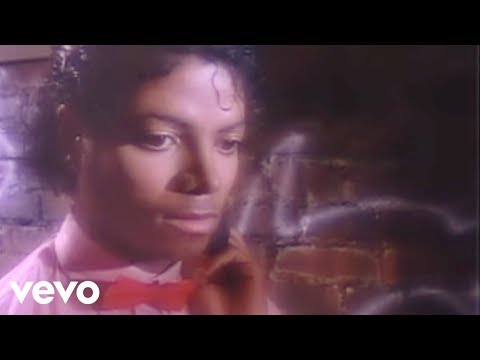
Video: Michael Jackson - Beat It (Official 4K Video) · michaeljacksonVEVO
Ambo Fam, let's talk about the strangest thing about "Beat It": for a song that sounds like a street fight set to a drum machine, it might be one of the most insistently peaceful hits ever recorded.
Forty-plus years after Michael Jackson unleashed the third single from Thriller, the track still gets filed under "tough guy energy" in the popular imagination. That red leather jacket, those knife-wielding dancers in the video, that snarling guitar. But read the lyrics closely and you find something almost subversive for a pop hit aimed partly at teenage boys in 1983: a repeated, unmistakable argument that walking away from violence is the stronger move. The Genius annotation for the song notes that "Beat It," released alongside "Billie Jean," helped push Thriller to the top of the charts and into the record books as the biggest-selling album of all time [1]. Two songs did that. One of them was a pacifist anthem in disguise.
The Anti-Macho Anthem Nobody Expected
Strip away the production and look at what Jackson is actually saying. "Don't wanna see no blood, don't be a macho man" is about as direct a rejection of tough-guy posturing as pop has ever produced. In the second verse he goes further, sketching a world where the rules of the street are rigged: they'll kick you, then beat you, then tell you it was fair. That's not bravado. That's a warning.
And the chorus, the part everyone screams in the car without thinking about it, lands the thesis. "No one wants to be defeated / Showin' how funky and strong is your fight / It doesn't matter who's wrong or right." Jackson isn't saying the fight doesn't matter because fighting is cool. He's saying it doesn't matter because winning it proves nothing. The whole song is a de-escalation manual disguised as a banger, and the fact that generations have sung along without noticing is maybe the greatest sleight of hand in his entire catalog.
It's worth remembering how deliberate this was. Jackson reportedly wanted to write something that would reach kids in gang-adjacent situations, a rock-leaning record with a message about survival rather than revenge. The result was a song that could sit comfortably on rock radio and R&B radio at the same time, which in the early 1980s was no small trick, and which carried a message that walking away is not the same as backing down.
The Solo That Broke the Rules
You cannot write about "Beat It" without writing about Eddie Van Halen. The story is legendary now: the guitarist laid down his solo as a favor, essentially for free, while his bandmates reportedly wondered why he was bothering. What he delivered is one of the most recognizable twenty-odd seconds of guitar in recorded music, a shrieking, tumbling run that turns a dance track into a rock monument.
The Wikipedia entry on the song devotes an entire section to that solo, and rightly so, because it changed what a pop single could contain [2]. Radio formats in 1983 were rigid things, and a hard-rock guitar break in the middle of a Michael Jackson record blurred lines that the industry preferred to keep crisp. Instead of alienating either audience, it recruited both. White rock listeners who might never have bought a Jackson record bought Thriller. R&B listeners got one of the fiercest guitar solos of the decade. Everybody won, and the walls between genres took a hit they never really recovered from.
A Video That Made Crips and Gangs Dance Together
Then there's the visual. The official video, now remastered in 4K on Jackson's official channel [1], is a mini-narrative about two gangs converging on a warehouse while a lone figure in a red jacket dances his way through the middle of it. The climax isn't a brawl. It's a choreographed standoff that dissolves into synchronized movement.
What's easy to forget in 2025 is how literal the casting was. Real gang members reportedly appeared in the video, and the production became a story in itself precisely because it put rival street presences on the same soundstage and got them moving in unison. The video's message mirrors the song's: the fight everyone came for never happens, and the absence of violence becomes the spectacle. For a medium still in its adolescence, that was a genuinely bold statement, and it helped cement music videos as an art form capable of carrying real narrative weight.
The Long Afterlife
The song's endurance shows up in strange places. Fall Out Boy recorded a version decades later, and "Weird Al" Yankovic's "Eat It" parody became a hit in its own right, which is the ultimate proof a song has entered the shared cultural bloodstream. The track has been reissued, remastered, and repackaged across Jackson's catalog, from Thriller itself to hits compilations, and the digital storefront for the song lists multiple restored versions of the video alongside its appearances across his albums [3].
But the reason it still matters isn't the chart history or the certifications. It's that the central tension never resolved. "Beat It" still sounds like a threat and still reads like a peace treaty. Every new generation discovers it, pumps a fist at the chorus, and only later realizes the fist was supposed to open.
Why It Still Hits
In a cultural moment where every disagreement escalates in public and backing down is treated as defeat, a song whose entire argument is "it doesn't matter who's wrong or right" feels almost radical again. Jackson framed retreat as strategy, not cowardice. The macho man is the one who gets hurt. The one who leaves gets the last verse.
That's the genius of it, pun fully intended. Quincy Jones produced a record so funky, so propulsive, so armed with Van Halen's guitar that you never notice it's lecturing you until the lecture is over. The best protest songs make you dance. The best peace songs make you feel tough. "Beat It" did both at once, and nobody has really pulled off the trick as cleanly since.
So next time it comes on, Ambo Fam, listen to what he's actually saying under all that fire. He told you not to be a macho man. He meant it.
Sources
Reviewed on 2026-10-10 for continued accuracy.