The Song Michael Jackson Recorded as a Weapon, and the All-Star Army Behind It
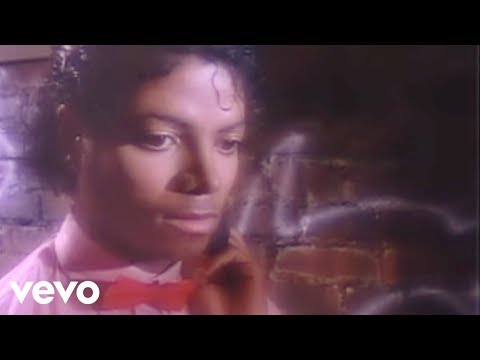
Video: Michael Jackson - They Don't Care About Us (Prison Version) (Official Video) · michaeljacksonVEVO
Ambo Fam, some songs age like wine. Others age like evidence. "They Don't Care About Us (Remastered Version)" is firmly in the second category, and nearly three decades after Michael Jackson first sharpened it into a protest anthem, the remastered cut that landed on the This Is It album in 2009 still sounds like it was written about the news you scrolled past this morning.
The remaster was released on October 26, 2009, as part of the This Is It collection, the album assembled around the rehearsals for the London comeback shows that never happened. The original track dates back to 1995, credited to MJJ Productions, and the official upload on the artist's verified channel has pulled in more than 40 million views since it went up in 2017 [1]. That number alone tells you something: this is not a deep cut gathering dust. It's a song people actively seek out, usually when the world gives them a reason to.
A Protest Song Wearing Pop Armor
What has always made "They Don't Care About Us" remarkable is how nakedly furious it is for a Michael Jackson record. This is the man who gave the world "Billie Jean" and "Man in the Mirror," but here he drops the diplomacy entirely. The lyrics are a litany of indignation, targeting police brutality, media distortion, and institutional indifference, and the delivery is percussive and clenched rather than smooth. The remaster sharpens that edge. The drums hit harder, the massed vocals feel like a crowd pressing against a fence, and the chant-like hook lands with the bluntness of a slogan shouted at a march.
The song's companion visuals deserve a mention too. The official prison-set video, directed by Spike Lee and available on the artist's official VEVO channel [1], places Jackson inside a penitentiary, intercut with real footage of beatings and unrest. It was controversial in 1996 and it is still uncomfortable now, which is precisely the point. Lee and Jackson weren't decorating a pop single. They were indicting a system.
The Credits Read Like a Summit Meeting
Here's the detail that genuinely deserves more attention: the personnel list on this recording is absurd. The official credits for the remaster read like someone threw a festival and invited three decades of American music [1]. Jackson himself handled composition, production, arrangement, guitars, drums, percussion, synthesizers and vocals. R. Kelly played keyboards and sang background. Boyz II Men, all four of them, contributed backing vocals alongside the Andrae Crouch Singers. The guitar bench included Nile Rodgers, Trevor Rabin, Paul Jackson Jr. and Toto's Steve Lukather. David Foster, Greg Phillinganes and Dallas Austin all showed up on keys. The rhythm section cycled through Omar Hakim, Steve Ferrone and Buddy Williams on drums, with Louis Johnson and Guy Pratt among the bassists.
And then there are the two names that stop you cold: The Notorious B.I.G. and Shaquille O'Neal, both credited with rap features. Biggie's verse is the one most listeners know from the original HIStory-era release, but seeing Shaq in the same credit block as Bernstein-conducted orchestral sessions (Elmer Bernstein, Bill Ross and Jeremy Lubbock all conducted) is a reminder of how Jackson built records. He didn't assemble a band. He assembled a city.
My honest take? That sprawl is the secret of the song's power. It sounds like a multitude because it literally is one. When Jackson snarls the title line, there are dozens of voices behind him, and the production lets you feel every one of them. It's protest music engineered at blockbuster scale, and nobody has really attempted it since.
The Streaming Afterlife
The numbers on streaming platforms back up the song's endurance. On one popular streaming host, the remastered version sits as track three on the This Is It album playlist, where it has racked up around 165,000 likes, holding its own between "Human Nature" at 1.2 million and "Smooth Criminal" at nearly 46,000 [2]. The track is also carried by major digital retailers, including Amazon Music's catalog [3], confirming it remains a standard fixture of Jackson's official catalog rather than a regional oddity.
What strikes me is the pattern of engagement. Casual listeners gravitate to the smoother hits, but "They Don't Care About Us" is the track that spikes whenever there is unrest in the headlines. It has become less a single and more a barometer. Every few years the world hands it a tragic promotional campaign, and every few years millions of people rediscover that Jackson saw it coming.
Why the Remaster Matters
It would be easy to dismiss the 2009 remaster as catalog housekeeping, a repackaging to accompany the This Is It film. I'd argue the opposite. The remaster arrived just months after Jackson's death, at a moment when the world was busy re-litigating his legacy, and the song it polished was the one where he stood accused of nothing except anger. Stripped of tabloid noise and given a cleaner, punchier mix, "They Don't Care About Us" re-emerged as arguably his most prescient recording.
Nearly thirty years on, the question the song asks hasn't aged a day. That's not a compliment to the songwriting. It's an indictment of us. Keep it on your playlist, Ambo Fam, and hope for the day it finally sounds dated.
Sources